Public Roadmap: Why to Have One and How to Build It
September 6, 2026
A public roadmap — one your customers can actually see — feels risky to a lot of teams. What if we change our minds? What if competitors watch? But done right, a public roadmap is one of the strongest trust-and-growth tools a product has. Here's the case for it, the risks worth managing, and how to build one.
Why have a public roadmap
It builds trust. A public roadmap shows customers you have a direction and you're moving on it. For a smaller product, that visible momentum is reassuring — it signals "this tool is alive and going somewhere," which matters when someone's deciding whether to rely on you.
It gathers input. When your roadmap is public and votable, it becomes a two-way conversation. Customers tell you which planned items matter most and suggest what's missing, so you build with demand rather than guesses. This is where a public roadmap and a feature request board merge into one thing.
It reduces support. "Are you going to build X?" and "is Y still coming?" stop clogging your inbox when the answer is a link. People check the roadmap themselves.
It closes the loop at scale. Moving items to "shipped" in public tells everyone who wanted them, at once, that you delivered — the feedback loop working automatically.
The risks (and how to manage them)
Public roadmaps have real trade-offs, all manageable:
Fear of commitment. If you publish dates, you'll miss some and look bad. Fix: don't publish dates. Use Now-Next-Later horizons that communicate intent, not deadlines.
Competitor visibility. Competitors can see your plans. Fix: keep public items at the right altitude — themes and near-term features, not your secret strategic bets. Most of what users want isn't a secret anyway.
Changing your mind. You'll deprioritize things you listed. Fix: frame Later items as "under consideration," and communicate changes openly. Users forgive changes far more than silence.
How to build one
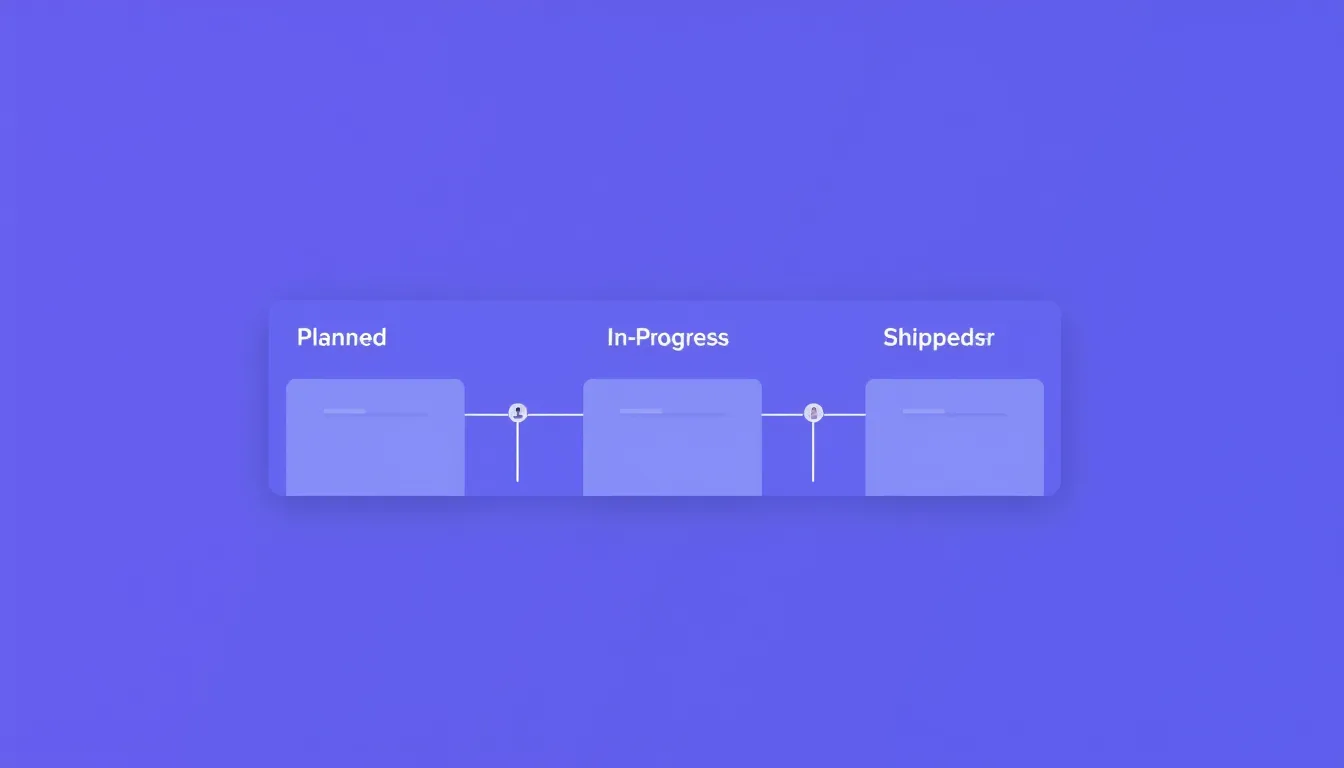
- Choose the format. A status board (Planned / In Progress / Shipped) is the most common and doubles as a Kanban roadmap. Now-Next-Later works well too.
- Decide what's public. Near-term and directional items, yes; sensitive strategic bets, keep internal. You can run a public roadmap and a private one.
- Make it votable. The magic of a public roadmap is input. Let users vote on planned items and submit new ones — that's what turns it from a billboard into a conversation.
- Keep it current. A stale public roadmap is worse than none. Update statuses as you go; if it's powered by a live board, this is nearly automatic.
- Close the loop. Announce shipped items and, where you can, notify the people who asked.
The easiest public roadmap
You don't need to build a public roadmap from scratch — a feedback board is one. Create a free board on FeatureRequest: users vote on what's planned, watch it move to shipped, and you get a public roadmap and a feedback channel in a single link. See why every SaaS needs a feedback board for the bigger picture.
Let your users tell you what to build
A public board where customers post requests and vote on them. Free for your first board.
Start free