How to Build a Customer Feedback Loop That Actually Ships Features
September 6, 2026
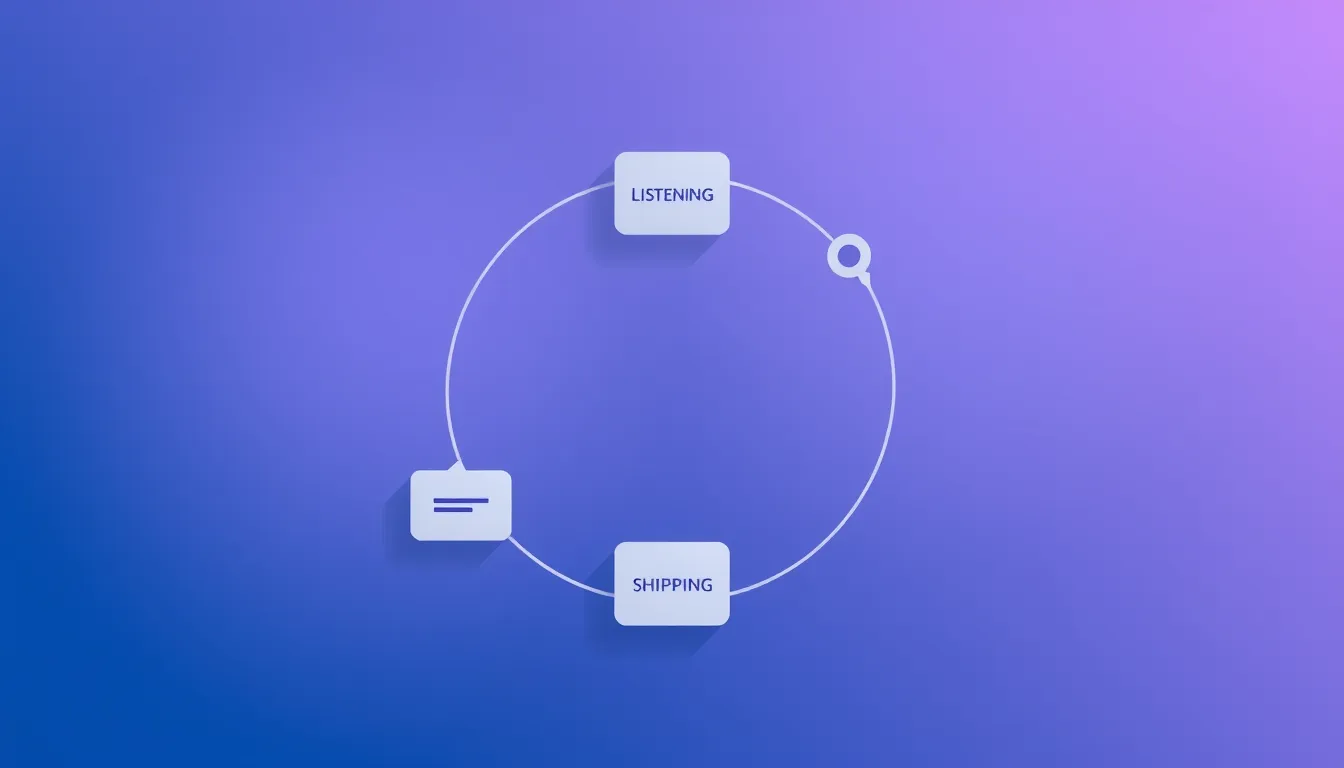
Plenty of teams collect feedback. Far fewer turn it into shipped features and tell the people who asked. That gap is the difference between a suggestion box that quietly dies and a feedback loop that compounds — where every cycle makes users more willing to give feedback and more likely to stay. Here's how to build the kind that actually ships.
The four stages of a feedback loop
A working feedback loop is a cycle with four stages. Break any one and the loop leaks.
1. Collect. Gather input where it's low-friction for users — ideally a public feedback board plus a habit of routing in feedback from support and other channels. If collection is hard, the loop starves. (See nine ways to collect feedback.)
2. Prioritize. Turn raw input into a ranked decision using votes plus a framework like RICE. Without this stage, you build reactively and the loud voices win.
3. Build & ship. Actually deliver the chosen features. Obvious, but the loop dies here most often — feedback gets collected and prioritized, then buried under everything else.
4. Close the loop. Tell users what you shipped, especially the ones who asked. This is the stage almost everyone skips, and it's the most important.
Why closing the loop is the whole game
Here's the counterintuitive part: the "tell them" stage matters as much as the building. When a user sees their request move to "shipped" — or gets a note saying "you asked, we built it" — three things happen. They feel heard, so they stay. They give more and better feedback, because they've learned it goes somewhere. And they become advocates, because "they actually built what I asked for" is a story people tell.
Skip this stage and you get the opposite: users conclude feedback vanishes into a void, stop bothering, and your collection stage dries up. The loop isn't closed — it's cut.
Making the loop low-effort
The reason loops break is usually effort, not intent. The fix is to use tools that make closing the loop nearly automatic. A feature request board with status labels does a lot of this for free: when you mark a request "planned" then "shipped," everyone following it sees the update without you writing individual messages. On FeatureRequest, the status change is the loop-closing — public, automatic, and visible to everyone who cares.
Layer on a lightweight habit: when you ship something requested, post a one-line update and, where you can, notify the specific people who asked. That small step turns a status change into a relationship.
The compounding effect
A closed feedback loop compounds. Each turn makes the next one easier: more trust, more input, better prioritization, more shipped features that users actually wanted, more advocacy. It's one of the few genuinely self-reinforcing growth mechanics available to a small product — and it costs almost nothing to run once the board is in place.
Start the loop
The loop can't start until collection does. Create a free feedback board on FeatureRequest, start gathering ranked input, and use the status labels to close the loop from day one.
Let your users tell you what to build
A public board where customers post requests and vote on them. Free for your first board.
Start free