The Now-Next-Later Roadmap: A Simpler Way to Plan
September 6, 2026
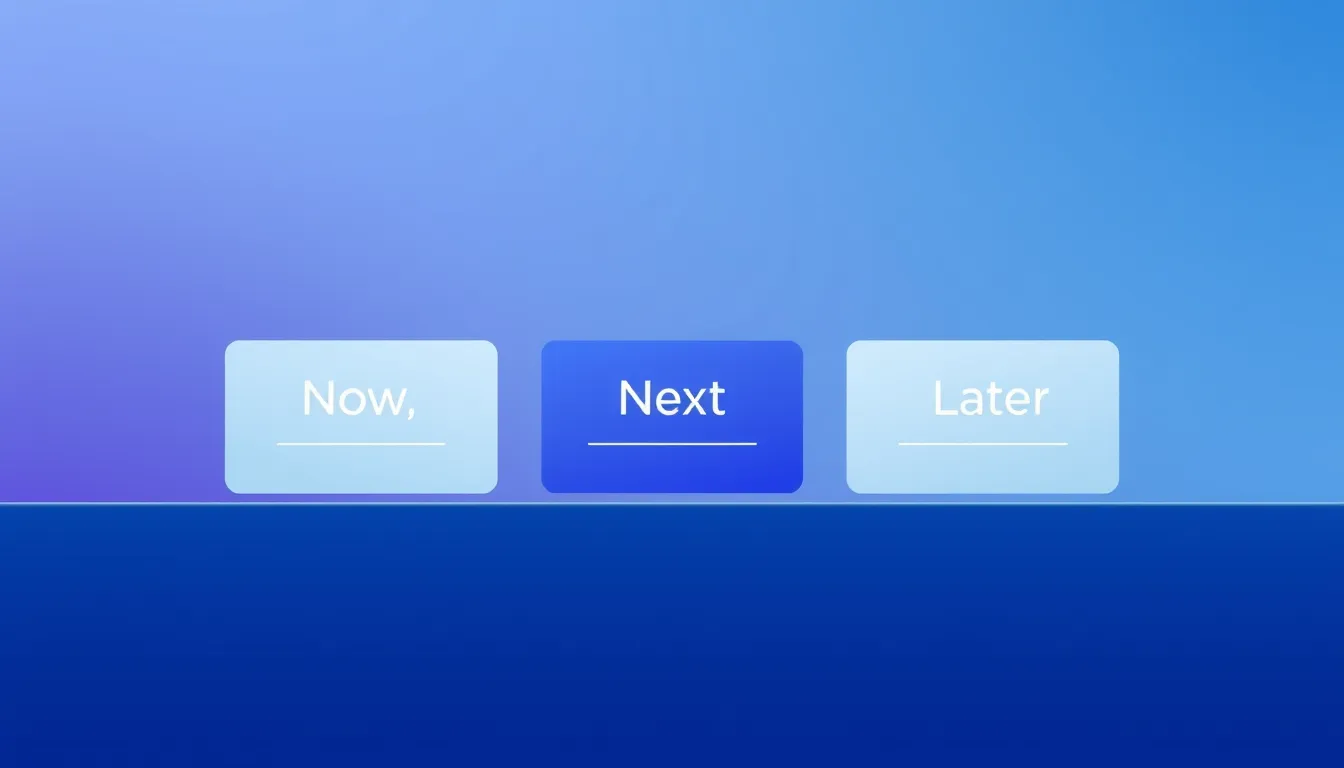
Traditional roadmaps promise specific features on specific dates — and then reality happens, estimates slip, and the roadmap becomes a source of broken promises. The Now-Next-Later roadmap fixes this by trading false precision for honest horizons. It's become the default format for modern product teams, and for good reason.
What it is
Instead of a calendar, a Now-Next-Later roadmap uses three time horizons:
- Now — what you're actively building. Highest confidence, most detail.
- Next — what's coming after, in the near term. Decided, but not started. Medium confidence.
- Later — what's on the horizon. Directional themes and ideas, low commitment, lowest detail.
Features move leftward over time: a Later idea becomes a Next priority, then a Now project, then shipped.
Why it works so well
It matches how certainty actually decreases with time. You know a lot about what you're building now and very little about six months out. Now-Next-Later builds that reality into the format — detail and commitment shrink as the horizon extends, instead of pretending you can forecast Q4 precisely.
It kills the broken-promise problem. Without dates, you can't miss them. You communicate sequence and intent ("this is coming") without over-committing to timing ("by March 15"). Customers get direction; you get flexibility.
It's easy to maintain. Updating a Now-Next-Later roadmap is just moving cards between three columns as things progress — far less work than re-plotting a timeline every time an estimate changes. Low maintenance means it actually stays current, which is most of what makes a roadmap useful.
It focuses conversations on priority, not deadlines. Stakeholder debates shift from "why isn't this done by X?" to "should this be Now or Next?" — a much healthier question.
How to run one
Start with three columns. Populate Now with your active work (keep it small — realistic capacity). Fill Next with your near-term decided queue. Use Later for directional themes you're likely to pursue but haven't scheduled. Pair each item with a one-line why.
Then feed it from real demand. Your Later and a "under consideration" area are where a feature request board plugs in — top-voted requests graduate into Next as demand proves itself. A board's planned/in-progress/shipped statuses map almost directly onto Now-Next-Later, which is why the two work so well together.
When a timeline is still better
Now-Next-Later isn't universal. If you have hard external deadlines (a compliance date, a partner launch, a seasonal event), a timeline communicates those commitments better. Many teams run both: Now-Next-Later for the public, product-facing roadmap, and a dated internal plan for the few genuine deadlines. See our 7 roadmap formats for the alternatives, and how to build a roadmap for the process.
Start with three columns
The easiest Now-Next-Later roadmap is one your users can see and shape. Create a free board on FeatureRequest — its statuses give you Now, In Progress, and Shipped out of the box, fed by real user demand.
Let your users tell you what to build
A public board where customers post requests and vote on them. Free for your first board.
Start free